I have to tell you, this Lemon Bundt Cake Recipe is one of my absolute favorites when I want something that feels both special and comforting. It’s a bright, moist cake that bursts with fresh lemon flavor in every bite, paired with a luscious, tangy icing that perfectly balances its sweetness. Whenever I bake this, my kitchen fills with the wonderful scent of lemon zest and butter, and it always gets rave reviews from friends and family. Whether for a weekend treat or a festive gathering, it’s just the right kind of cake that brings smiles all around with its cheerful flavor and elegant look.
Why You’ll Love This Lemon Bundt Cake Recipe
What I truly adore about this Lemon Bundt Cake Recipe is the flavor profile — the combination of lemon zest, lemon juice, and a touch of lemon extract creates a vivid, fresh citrus punch that feels like sunshine on your taste buds. The tartness of the lemon blends beautifully with the rich, tender crumb of the cake, which is thanks to the perfect balance between butter, sour cream, and eggs. The sour cream keeps the cake incredibly moist and adds a slight tang that elevates the lemon flavor even more. Every slice is a little slice of happiness.
This cake isn’t just delicious but also surprisingly straightforward to make. I appreciate how the ingredients are common pantry staples, and the method is simple—no complicated steps or fancy equipment needed beyond a Bundt pan. It’s forgiving, too; you don’t need to be a baking expert to get fantastic results. Plus, it’s ideal for so many occasions: from casual family dinners and afternoon tea to birthday parties and holidays. The stunning shape of the Bundt pan and the glossy lemon icing on top make it look impressive even if you didn’t spend hours decorating.
Ingredients You’ll Need

Gathering the ingredients for this cake is a joy because each one is straightforward but absolutely essential to crafting the perfect texture, depth of flavor, and that pretty golden color you expect from a Lemon Bundt Cake. Each component plays a role in making this dessert a standout.
- 1 cup butter, softened: The richness and moisture foundation of the cake, softened for easier creaming with sugar.
- 3 cups sugar: Balances the lemon’s tartness while contributing to the cake’s tender crumb and slight caramelized color.
- 6 large eggs, room temperature: Acts as the main binder and adds structure and fluffiness to the cake.
- 5 tablespoons lemon juice: Provides fresh citrus brightness and tanginess that wakes up the flavor.
- 1 tablespoon grated lemon zest: Delivers aromatic oils for that intense lemon fragrance and taste.
- 1 teaspoon lemon extract: Amplifies the lemon flavor without adding extra liquid.
- 3 cups all-purpose flour: Gives the cake its body and firmness; the correct amount prevents heaviness.
- 1/2 teaspoon baking soda: Helps the cake rise gently and keeps it tender.
- 1/4 teaspoon salt: Enhances the overall flavor, balancing sweetness perfectly.
- 1-1/4 cups sour cream: Ensures moistness and adds a subtle tang that complements the lemon.
- For the icing: 1/4 cup sour cream, 2 tablespoons butter, 2-1/2 cups confectioners’ sugar, 2 to 3 tablespoons lemon juice, and 2 teaspoons grated lemon zest to top off the cake with a luscious, tangy finish.
Directions
Step 1: Prep your Bundt pan. I recommend using a 10-inch fluted tube pan for the best shape and baking experience. Grease the inside well with shortening, not butter, to avoid sticking. Then dust it with flour, tapping out any excess. If you notice any missed spots, add a bit more shortening and flour to those areas. This step, though seemingly small, makes a huge difference in releasing your cake perfectly later.
Step 2: Cream the softened butter and sugar together in your stand mixer bowl until the mixture is light and fluffy; this usually takes about six minutes. This air incorporation is key to a tender crumb and beautiful rise.
Step 3: Add the eggs one at a time, beating well after each addition. This prevents curdling and ensures an even mixture. Stir in the lemon zest, lemon juice, and lemon extract to build layers of bright citrus flavor that will shine through.
Step 4: In a separate bowl, whisk together the flour, baking soda, and salt. Gradually add these dry ingredients in batches, alternating with the sour cream, mixing until just combined after each addition. Be very careful not to overmix here, or the cake could become dense and tough.
Step 5: Pour the batter into your prepared Bundt pan. To address the typical domed bottom on Bundt cakes, gently press some batter higher along the edges to create a shallow trough in the middle. This helps the cake bake evenly and look flawless once sliced.
Step 6: Bake at 350ºF for 55 to 60 minutes. At about 55 minutes, start checking doneness with a toothpick inserted in the center. If it comes out clean, the cake is ready. If not, give it a few more minutes, as Bundt cakes usually need a bit longer due to their large size and density.
Step 7: Once out of the oven, cool the cake on a wire rack for 10 minutes. Then place the cooling rack over the pan and invert to release the cake. If it seems stuck, gently tap the pan edges on the countertop (protecting your surface with a towel) to loosen it. If it still won’t budge, leave it inverted on the rack for about 10 minutes—you’ll find gravity helps it release.
Step 8: Allow the cake to cool completely before icing.
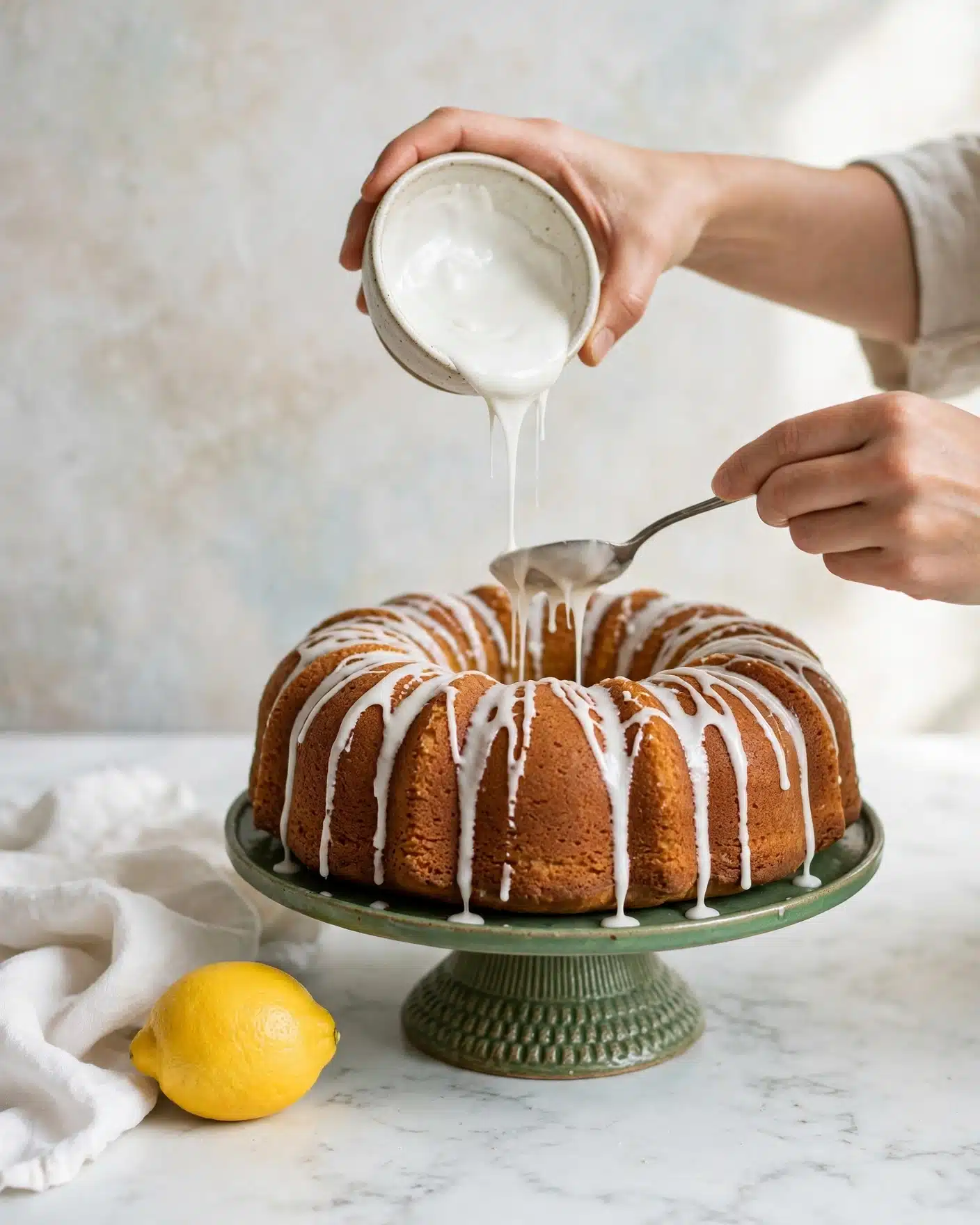
Step 9: To make the icing, beat together the sour cream and softened butter until smooth. Gradually add the confectioners’ sugar, mixing until creamy. Stir in the lemon juice and zest to give a fresh, vibrant finish. Drizzle the icing over the cake, allowing it to naturally drizzle down the grooved edges. For an extra touch of flair, sprinkle a little extra lemon zest on top.
Servings and Timing
This Lemon Bundt Cake Recipe yields about 12 hearty servings, perfect for sharing with friends and family. The prep time is approximately 20 minutes, mostly spent mixing and preparing the pan. Baking takes about 55 to 60 minutes, and then you’ll want to factor in 10 minutes for initial cooling and about 30 to 45 minutes for the cake to cool completely before icing. Altogether, expect to spend around 1 hour and 15 minutes from start to finish, though the wonderful results are well worth the wait!
How to Serve This Lemon Bundt Cake Recipe
When it comes to serving this cake, I love to keep things simple because the cake itself is already bursting with flavor. It’s fantastic on its own with a cup of tea or coffee for a cozy afternoon snack. But if you’re looking to elevate it, serve slices alongside fresh berries or a dollop of lightly sweetened whipped cream to add a touch of creaminess and contrast to the tangy lemon.
Presentation-wise, I find that serving on a white or pastel-colored cake stand really makes that beautiful icing and lemon zest pop. Adding a few lemon slices or edible flowers around the cake on the plate can turn it into a showstopper for holiday gatherings or special occasions. I love cutting moderately thick slices to really appreciate both the moist crumb and the glossy icing.
For beverages, it pairs wonderfully with a crisp white wine like a Sauvignon Blanc or a light Prosecco, bringing out the citrus notes. If you’re serving it at a daytime event, a sparkling lemonade or iced herbal tea also complements the flavors beautifully. I usually recommend serving this cake at room temperature or slightly chilled, as it allows the icing to stay creamy and the flavors to meld perfectly.
Variations
I enjoy experimenting with this Lemon Bundt Cake Recipe to suit different preferences or dietary needs. For instance, if you want a gluten-free version, I’ve had success swapping the all-purpose flour for a gluten-free blend with xanthan gum—just be sure to measure accurately to maintain the cake’s structure and tenderness.
For a vegan adaptation, replacing butter with coconut oil and using flax eggs instead of regular eggs works well, though the texture will be a bit different—slightly denser but still delicious. I also sometimes like to add a teaspoon of poppy seeds to the batter for a delightful crunch and extra texture that complements the lemon beautifully.
If you want a richer flavor, try swapping the sour cream for Greek yogurt or adding a bit of cream cheese to the icing. Another twist is to brush the baked cake with a simple lemon syrup made from lemon juice and sugar before icing—it gives a shiny glaze and an extra punch of moisture.
Storage and Reheating
Storing Leftovers
If you have leftovers (and believe me, it’s hard not to eat this cake all at once!), store them in an airtight container at room temperature for up to 3 days. I like to keep mine wrapped well in plastic wrap first, then placed into a container to lock in moisture and maintain freshness. If your kitchen is warm, refrigeration is a good idea, though this can slightly firm up the icing.
Freezing
This cake freezes wonderfully, making it an excellent make-ahead option. To freeze, let the cake cool completely and do not add icing yet. Wrap the cake tightly in plastic wrap, then in aluminum foil or place it in a large freezer bag. It will keep beautifully for up to 3 months. When you’re ready to serve, thaw the cake in the fridge overnight and ice it fresh the next day to enjoy that perfect creamy topping.
Reheating
The best way to refresh slices is to let them come to room temperature naturally—warmth really enhances the lemony aroma and softens the crumb. If you prefer it warm, pop a slice in the microwave for 15 to 20 seconds but avoid overheating because it can dry out or melt the icing unevenly. Reheating in an oven at 300ºF for about 10 minutes wrapped loosely in foil also works well, especially if you prefer a gentle heat to restore moisture without melting the glaze too much.
FAQs
What if I don’t have a Bundt pan? Can I use a regular cake pan?
You definitely can! While the Bundt pan gives the cake its beautiful shape and allows it to cook evenly, a regular 9×13-inch pan or two 8-inch round pans will work in a pinch. Just adjust the baking time accordingly—usually, a 9×13 pan will take a bit longer, and smaller pans will bake faster. Keep an eye on it and use the toothpick test for doneness.
How do I know when the cake is done baking?
The best test is inserting a toothpick or wooden skewer into the center of the cake. If it comes out clean or with just a few moist crumbs clinging to it, the cake is done. Because Bundt cakes are dense, a little bit of moisture is okay as long as it’s not batter. Also, the cake should spring back lightly to the touch.
Can I make this cake ahead of time?
Absolutely! This Lemon Bundt Cake Recipe is perfect for making a day ahead. Bake and cool the cake fully, then wrap it tightly and keep it at room temperature or in the fridge. Add the icing just before serving to keep it fresh and vibrant. It tastes even better the next day once the flavors have melded.
What’s the secret to preventing the cake from sticking to the Bundt pan?
Using shortening instead of butter to grease the pan, then dusting it well with flour, is key. Butter contains milk solids which can cause sticking. Also, give the pan plenty of time to cool and follow the flipping instructions gently to avoid tearing the cake.
Can I add other flavors or mix-ins to this Lemon Bundt Cake Recipe?
Yes! You might try adding blueberries or raspberries to the batter for a fruity twist, or even a bit of poppy seed for texture. Just be mindful not to add too much extra liquid. Vanilla extract can substitute lemon extract if you want a subtler citrus note combined with vanilla warmth.
Conclusion
I truly hope you give this Lemon Bundt Cake Recipe a try because it has become a cherished staple in my kitchen. It’s the kind of dessert that feels special enough for celebrations but simple enough to brighten an ordinary day. Every time I make it, the fresh lemon flavor and tender crumb bring joy to everyone around the table. I can’t wait for you to experience that same delight with your friends and family!
Print
Lemon Bundt Cake Recipe
- Prep Time: 15 minutes
- Cook Time: 1 hour
- Total Time: 1 hour 15 minutes
- Yield: 12 servings
- Category: Dessert
- Method: Baking
- Cuisine: American
Description
This classic Lemon Bundt Cake recipe features a tender, moist crumb infused with fresh lemon juice, zest, and extract for a vibrant citrus flavor. Topped with a luscious sour cream and lemon icing, this cake is perfect for gatherings or a delightful dessert treat. The use of sour cream adds richness and moisture, making every bite deliciously soft and flavorful.
Ingredients
Cake
- 1 cup butter, softened
- 3 cups sugar
- 6 large eggs, room temperature
- 5 tablespoons lemon juice
- 1 tablespoon grated lemon zest
- 1 teaspoon lemon extract
- 3 cups all-purpose flour
- 1/2 teaspoon baking soda
- 1/4 teaspoon salt
- 1–1/4 cups sour cream
Icing
- 1/4 cup sour cream, room temperature
- 2 tablespoons butter, softened
- 2–1/2 cups confectioners’ sugar
- 2 to 3 tablespoons lemon juice
- 2 teaspoons grated lemon zest
- Additional grated lemon zest, optional for garnish
Instructions
- Prep your Bundt pan: Grease a 10-inch fluted tube Bundt pan thoroughly using shortening, coating the entire inside surface. Dust the pan with flour, then tap out the excess. Reapply shortening and flour on any missed spots to ensure the cake releases easily. Avoid butter for greasing as its milk solids can cause sticking.
- Mix the batter: Cream the softened butter and sugar in a stand mixer or with a hand mixer until light and fluffy, about six minutes. Add eggs one at a time, beating well after each addition. Stir in lemon zest, lemon juice, and lemon extract to enhance flavor. In a separate bowl, whisk together the flour, baking soda, and salt. Add this dry mix alternately with the sour cream to the wet ingredients, beating just until combined to avoid overmixing and tough cake.
- Bake the Bundt cake: Pour the batter into the prepared pan, shaping it slightly so more batter gathers around the edges and creating a shallow trough in the center. Bake at 350ºF (175ºC) for 55 to 60 minutes. Begin checking doneness at 55 minutes by inserting a toothpick; it should come out clean when done. Bundt cakes are dense and may require the full time or a bit longer.
- Cool and flip: Allow the cake to cool in the pan on a wire rack for 10 minutes. Place a wire rack on top of the cake and invert the pan to release the cake. If it sticks, gently tap the sides of the pan on a countertop padded with a towel to loosen it. If still stuck, leave inverted to let gravity help free the cake. Cool completely before icing.
- Ice the cake: Beat together the sour cream and softened butter until smooth. Gradually add confectioners’ sugar, mixing well. Stir in lemon juice and lemon zest. Drizzle the icing over the cooled cake, letting it run down the grooves. Garnish with additional lemon zest if desired. Slice with a serrated knife and serve.
Notes
- Use shortening or a baking spray with flour to grease Bundt pans to ensure easy cake release.
- Room temperature eggs and sour cream help create a smooth batter.
- Don’t overbeat the batter after adding flour to keep the cake tender.
- Creating a trough in the batter before baking helps the cake bake evenly.
- Check for doneness with a toothpick at the 55-minute mark to avoid overbaking.
- Let cake cool completely before icing to prevent melting the glaze.